Introduction
A few days before a beach vacation, Riya decided to wax her legs one last time. Everything looked smooth for a day or two, but then the familiar problem arose. Tiny red bumps started appearing around the hair follicles. Some were itchy, some painful, and a few even turned dark after healing. By the time her trip started, she was more focused on hiding her skin than enjoying the holiday.
If you’ve ever dealt with ingrown hair, you probably know this feeling very well.
It often starts as a small issue after shaving, waxing, or threading. But over time, it becomes frustrating. The bumps keep coming back, the skin starts looking uneven, and sometimes even painful cyst-like spots appear. Many people spend years trying scrubs, creams, and home remedies without seeing lasting improvement.
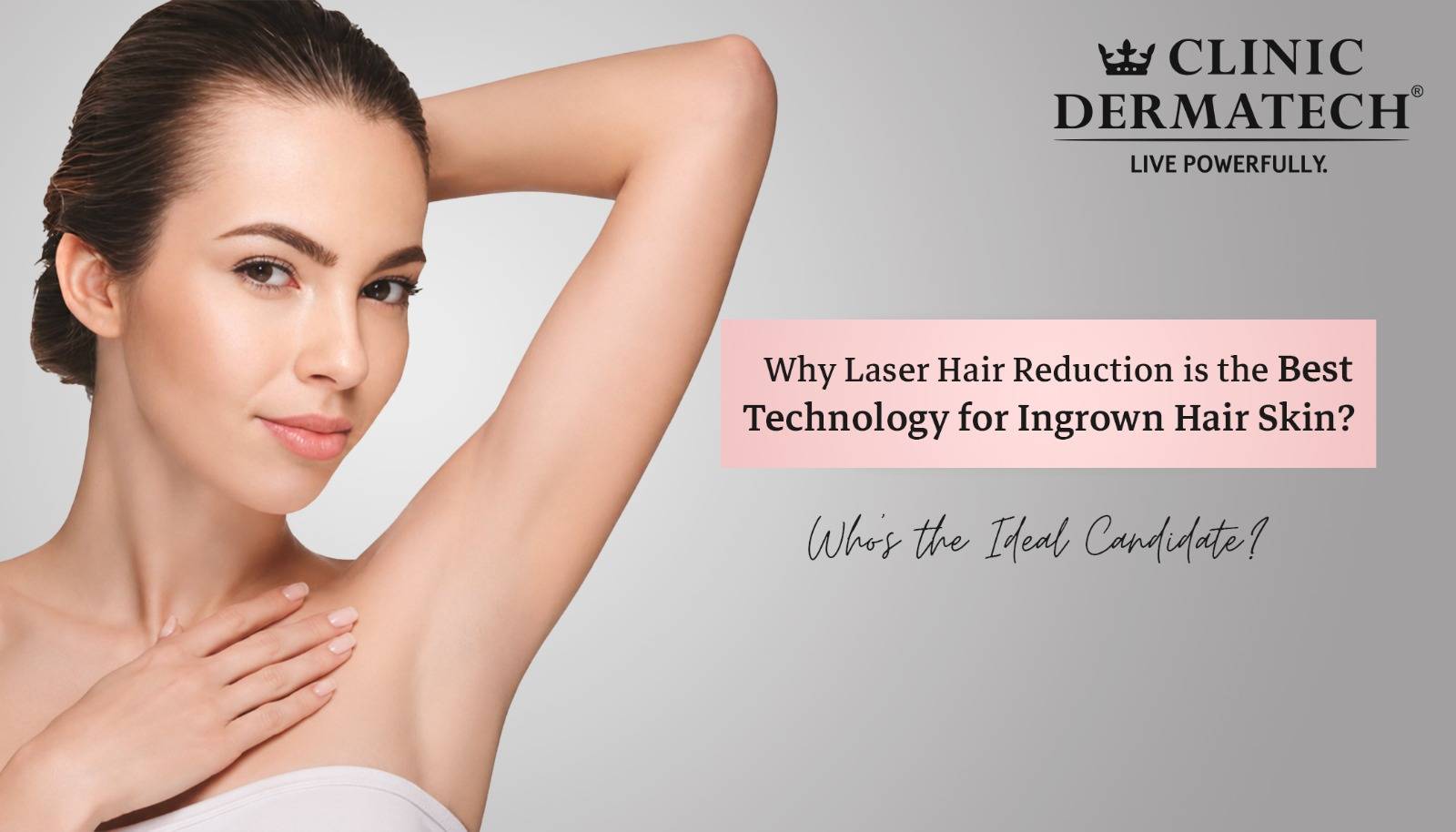
This is exactly why laser hair reduction has become such a game changer, especially for people struggling with ingrown hair. It does not just remove hair temporarily. It targets the root cause of the problem.
🌟 Prefer Clinic Dermatech on Google?
See our expert skincare articles first whenever you search on Google!
★ Add Us on GoogleLet’s understand why ingrown hair happens in the first place and why laser hair reduction is considered one of the best long-term solutions for it.
What Exactly Is Ingrown Hair?
Ingrown hair happens when a hair curls back into the skin instead of growing outward normally. This trapped hair creates inflammation, redness, itching, and bumps on the skin.
For some people, it may look like small razor bumps. For others, it can become painful and leave marks behind.
It commonly happens in areas where hair removal is frequent, such as:
- Underarms
- Bikini line
- Legs
- Beard area
- Chin and neck
People with curly or coarse hair often experience it more because the hair naturally bends back toward the skin.
The frustrating part is that even after the bump heals, it may leave pigmentation or scars that take a long time to fade.
Why Traditional Hair Removal Often Makes It Worse
Most people rely on shaving, waxing, epilators, or threading to remove unwanted hair. While these methods work temporarily, they can actually increase the chances of ingrown hair.
Shaving cuts the hair sharply at the surface. As the hair grows back, the sharp edge can pierce the skin and get trapped underneath.
Waxing pulls the hair out from the root, but repeated trauma to the skin can sometimes disturb the direction of hair growth.
Over time, the cycle becomes exhausting.
You remove the hair. The bumps return. The skin gets irritated. Then you wait for it to heal before removing hair again.
This constant cycle is one of the biggest reasons people start looking for a more permanent solution.
How Laser Hair Reduction Changes Everything
Laser hair reduction works differently from regular hair removal methods.
Instead of removing hair from the surface, the laser targets the hair follicle itself. The heat energy weakens the follicle and gradually reduces future hair growth.
This means the hair becomes:
- Finer
- Softer
- Slower growing
- Less likely to curl back into the skin
As the number of active hair follicles reduces, the chances of ingrown hair also decrease significantly.
For many people, this is the first time they experience smoother skin without constantly worrying about bumps, itching, or painful inflammation.
Why Laser Hair Reduction Is Especially Good for Ingrown Hair
It Reduces the Root Cause
Most treatments only calm the symptoms of ingrown hair. Creams may reduce redness. Scrubs may help unclog pores temporarily.
But laser hair reduction addresses the actual source, which is the hair follicle.
Less hair growth means fewer chances of hair getting trapped under the skin.
That’s why the results are often much more long-lasting compared to temporary solutions.
It Helps Improve Skin Texture
People with frequent ingrown hair often notice roughness on the skin.
The skin may feel uneven because of repeated inflammation, bumps, and healing.
Once laser sessions begin reducing hair growth, the skin usually starts feeling smoother over time. Since the irritation cycle slows down, the skin finally gets a chance to recover properly.
Many people say their skin feels healthier overall after completing their sessions.
It Can Help Reduce Dark Marks
Ingrown hair often leaves behind pigmentation, especially in areas like the underarms, bikini line, and neck.
This happens because repeated inflammation triggers post-inflammatory pigmentation.
While laser hair reduction is not directly a pigmentation treatment, reducing the frequency of ingrown bumps can help prevent new marks from forming.
Over time, the skin starts looking clearer because there is less ongoing irritation.
It Saves Time and Effort
Think about how much time goes into regular hair removal.
Booking waxing appointments. Shaving every few days. Dealing with razor burns. Waiting for hair growth before the next session.
Laser hair reduction simplifies life in a big way.
After completing the recommended sessions, many people notice dramatically reduced hair growth, which means less maintenance overall.
For people who constantly struggle with ingrown hair, this convenience feels like a huge relief.
What Does It Feel Like During Treatment?
One of the biggest myths about laser hair reduction is that it is extremely painful.
Most modern laser technologies are designed to be much more comfortable than older systems. People usually describe the sensation as a mild snapping feeling or a little warmth on the skin.
The treatment time also depends on the area being treated. Smaller areas like the upper lip or underarms may take only a few minutes.
There may be slight redness afterward, but it usually settles quickly.
How Many Sessions Are Usually Needed?
Laser hair reduction is not a one-session treatment because hair grows in different cycles.
Most people need multiple sessions spaced a few weeks apart to target hair effectively during its active growth phase.
The exact number depends on factors like:
- Hair thickness
- Skin type
- Hormonal conditions
- Treatment area
Many people begin noticing a difference within the first few sessions itself, especially in terms of reduced ingrown bumps and smoother skin.
Who Is the Ideal Candidate for Laser Hair Reduction?
Laser hair reduction works well for a wide range of people today because technology has improved significantly.
You may be an ideal candidate if:
You Frequently Get Ingrown Hair
This is one of the clearest signs.
If every shaving or waxing session leaves you with bumps, itching, or painful spots, laser hair reduction can make a noticeable difference.
You Have Coarse or Thick Hair
Coarse hair is more likely to become trapped under the skin.
Laser treatments often work particularly well on thicker hair because the laser targets pigment in the hair follicle.
You Are Tired of Constant Maintenance
Many people simply get exhausted with the never-ending cycle of hair removal.
If you want smoother skin with less effort in the long run, laser hair reduction can be a practical solution.
You Have Sensitive Skin
Some people develop redness, rashes, or irritation after shaving and waxing.
Laser hair reduction can help reduce the need for frequent hair removal methods that trigger skin sensitivity.
You Want Cleaner-Looking Underarms or Bikini Areas
Repeated ingrown hair and inflammation can make these areas appear darker or uneven.
By reducing hair growth and irritation, laser treatments often help the skin appear fresher and smoother over time.
Is It Safe for Everyone?
Modern laser technology has become much safer and more advanced than before. Different lasers are now available for different skin tones and hair types.
However, consultation is still important because every person’s skin and hair pattern is unique.
A trained professional can assess:
- Your skin type
- Hair texture
- Medical history
- Sensitivity level
This helps create a treatment plan that is both safe and effective.
Why Professional Treatment Matters
Laser hair reduction is highly technique-dependent.
The machine settings, skin assessment, and treatment approach all matter a lot when it comes to results and safety.
This is why choosing an experienced clinic is important.
At Clinic Dermatech, laser hair reduction treatments are designed with individual skin needs in mind. Instead of a one-size-fits-all approach, the focus is usually on understanding the person’s skin type, hair growth pattern, and concerns like ingrown hair or sensitivity.
A proper consultation and customised treatment plan can make the experience much smoother and more effective.
What Changes After Laser Hair Reduction?
One of the biggest changes people notice is freedom from constantly thinking about their skin.
You stop planning your life around waxing appointments. You stop worrying about bumps appearing after shaving. You stop feeling uncomfortable wearing sleeveless clothes or swimwear because of irritated skin.
The confidence shift is often bigger than expected.
People usually come in for hair reduction, but many stay happy because of how much calmer and smoother their skin starts feeling overall.
Conclusion
Ingrown hair may seem like a small issue at first, but anyone who deals with it regularly knows how frustrating it can become. The itching, bumps, pigmentation, and repeated irritation can affect both comfort and confidence.
Laser hair reduction stands out because it tackles the problem from the root instead of offering temporary relief. By reducing unwanted hair growth over time, it helps break the cycle that causes ingrown hair in the first place.
The result is not just less hair, but smoother, calmer, and healthier-looking skin.
And sometimes, that simple relief of not worrying about painful bumps anymore can make a surprisingly big difference in everyday life.
| FAQ | Answer |
|---|---|
| 1. Can laser hair reduction completely remove ingrown hair? | It can significantly reduce ingrown hair by reducing overall hair growth. Many people notice a major improvement after a few sessions. |
| 2. Is laser hair reduction painful? | Most people find it manageable. It usually feels like mild snapping or warmth on the skin. |
| 3. How many sessions are needed? | Most people need multiple sessions because hair grows in cycles. The exact number varies from person to person. |
| 4. Is laser hair reduction safe for sensitive skin? | Yes, modern laser technology can work well for sensitive skin when done by trained professionals. |
| 5. Can men also get laser hair reduction for ingrown hair? | Absolutely. Many men choose laser treatments for the beard area, chest, back, or neck where ingrown hair is common. |
| 6. Does laser hair reduction help with dark underarms caused by ingrown hair? | It can help indirectly by reducing repeated irritation and inflammation that often contribute to pigmentation. |
| 7. Can I shave between laser sessions? | Yes, shaving is usually allowed between sessions. However, waxing and threading are generally avoided during treatment. |
| 8. Is laser hair reduction permanent? | It provides long-term hair reduction. Some maintenance sessions may be needed over time. |
| 9. Which areas are most commonly treated for ingrown hair? | Underarms, bikini line, legs, chin, and beard areas are among the most common. |
| 10. When will I start seeing results? | Many people notice softer and slower hair growth within the first few sessions. |
Skin Or Hair Concern? Speak To A Specialist.
We are India’s most trusted name in aesthetics. Whatever your concern,
we know what works. Get a free callback today with options, pricing
and current offers on your treatment.
Skin Care Clinic in Indirapuram: A Guide to Modern Treatments & Technology!
NCTF Skin Treatment: Benefits, Process & What to Expect!