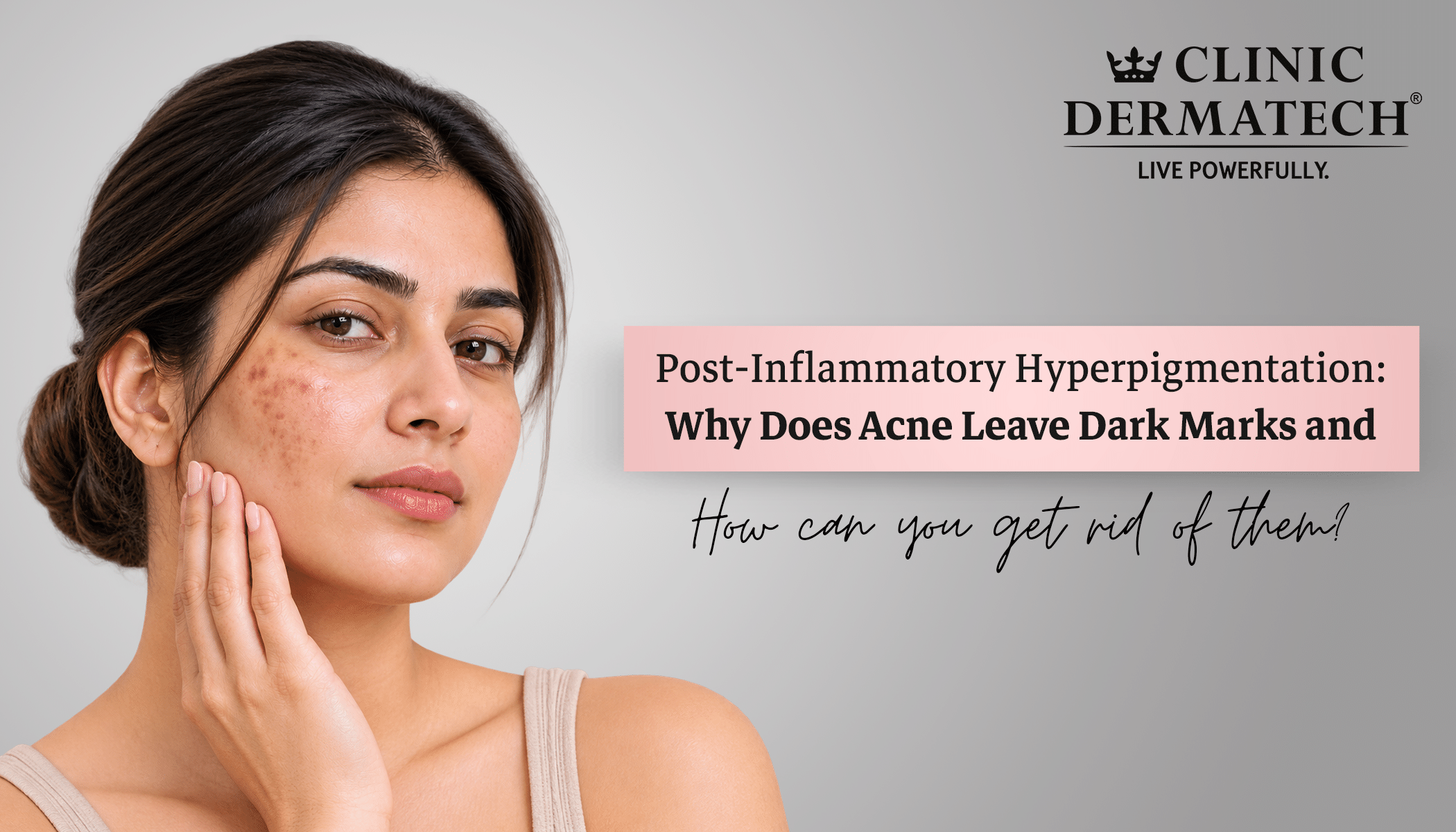
Have you ever noticed that even after a pimple has healed, a dark spot remains in its place? These stubborn marks are known as Post-Inflammatory Hyperpigmentation (PIH). They are one of the most common concerns among people struggling with acne, particularly those with Indian and deeper skin tones.
Why Does Acne Leave Dark Marks?
When acne develops, the skin experiences inflammation due to clogged pores, excess sebum, bacteria and the body’s inflammatory response, thus causing the skins barrier to disrupt. This inflammation stimulates melanocytes, the pigment-producing cells in our skin, to produce excess melanin.
As a result, even after the acne lesion settles, excess pigment may remain deposited in the affected area, leaving behind brown, dark brown or sometimes greyish marks.
The intensity of PIH depends on several factors, including the severity of acne, degree of inflammation, skin type, sun exposure and, importantly, picking or squeezing pimples.
🌟 Prefer Clinic Dermatech on Google?
See our expert skincare articles first whenever you search on Google!
★ Add Us on Google
It is important to understand that PIH is not the same as an acne scar. Acne scars involve structural changes in the skin, such as depressions or raised tissue, whereas PIH is primarily a pigmentation problem without permanent textural damage.
How Can You Clear Post-Acne Dark Marks?
The good news is that PIH is treatable, although patience and consistency are essential. A combination of skincare, sun protection and dermatologist-guided treatments can significantly improve pigmentation.
1. Sunscreen Is Non-Negotiable
UV exposure can darken existing pigmentation and delay its clearance. Use a broad-spectrum SPF 50 sunscreen daily, even when indoors near windows. Tinted sunscreens containing iron oxides can offer additional protection against visible light, particularly in darker skin tones.
2. Choose the Right Active Ingredients
Certain topical ingredients help reduce melanin production and accelerate pigmentation clearance:
– Azelaic Acid: Helps reduce inflammation, acne and pigmentation simultaneously.
– Niacinamide: Helps regulate melanosome transfer and helps in repairing skin barrier.
– Vitamin C: An antioxidant that helps reduce oxidative stress, brightens skin and helps in reducing pigmentation.
– Retinoids: Increase the rate of skin cell turnover and help improve both acne and PIH.
– Tranexamic Acid: Can help improve stubborn pigmentation in selected patients but under medical supervision.
These ingredients should be introduced gradually, depending on skin sensitivity and tolerance.
3. Professional Dermatological Treatments
For persistent pigmentation, dermatologists may recommend chemical peels such as glycolic acid, mandelic acid or stronger phenol peels depending on the patient’s skin type and condition.
Selected laser and light-based treatments may also help, but they must be chosen carefully, particularly in darker skin tones, as inappropriate settings can worsen pigmentation.
How Long Does It Take to Fade?
PIH does not disappear overnight. Superficial pigmentation may take several months to fade, while deeper pigmentation can persist for much longer. Consistent skincare and avoiding new acne breakouts are essential for lasting improvement.
The Takeaway
Acne may disappear, but the marks it leaves behind can affect confidence and skin appearance. The key is to treat acne early, avoid picking pimples to prevent spread of infection, protect your skin from sunlight and choose the right pigmentation-targeted treatment.
Most importantly visit a dermatologist when skin concerns appear as they say “ A stitch in time saves nine.”
Remember, clear skin is not just about treating pimples; it is also about preventing the marks they leave behind.
EXPERT INSIGHT
Dr. Saumya Takiar
Cosmetologist | Skin Care Expert