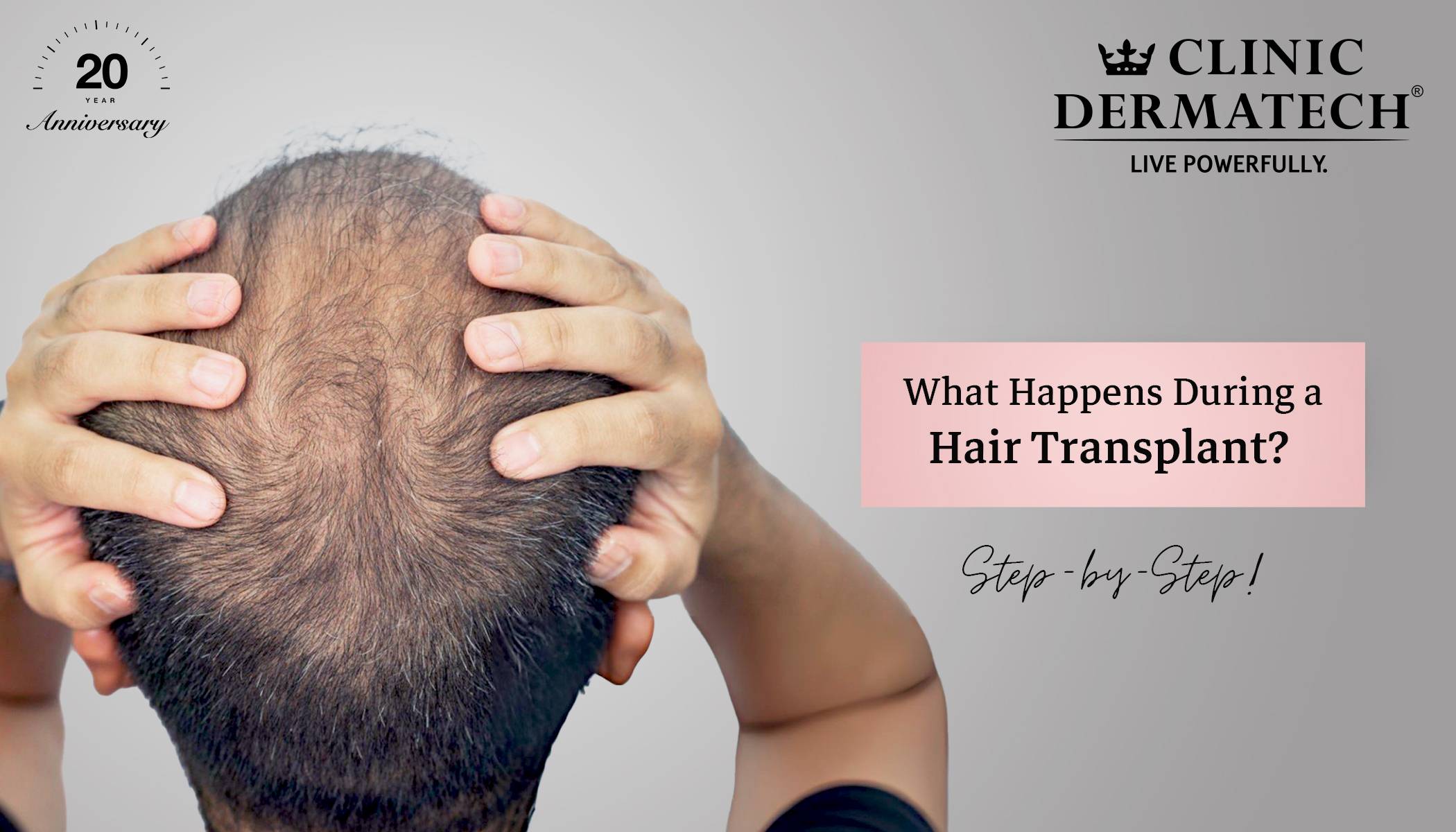
Hair loss rarely feels like it is only about hair.
You may first notice a slightly wider parting, a receding hairline or more hair than usual on your pillow. Then, slowly, you start changing your hairstyle, avoiding certain photographs or checking your hairline every time you look in the mirror. For some people, hair thinning can affect confidence just as much as appearance.
🌟 Prefer Clinic Dermatech on Google?
See our expert skincare articles first whenever you search on Google!
★ Add Us on GoogleWhen hair loss becomes advanced, topical products and non-surgical treatments may not always be enough to restore the density that has already been lost. This is where an advanced hair transplant can become an option worth discussing.
A hair transplant is a surgical procedure in which healthy hair follicles are taken from a donor area, usually at the back of the scalp, and transplanted into areas where hair has become thin or bald. At Clinic Dermatech, hair transplant procedures are planned according to the individual’s stage of hair loss, expectations, and donor hair density.
What Is an Advanced Hair Transplant?
In simple terms, a hair transplant moves your own hair from areas genetically resistant to hair loss to areas where you have experienced thinning.
The donor area is generally located at the back of the head. The follicles are carefully harvested and then placed into the thinning or balding areas of the scalp.
The goal is not simply to add as many hairs as possible. A good transplant also needs to look natural. This is why planning the hairline, assessing the donor area and understanding the pattern and stage of hair loss are important parts of the process.
Clinic Dermatech describes its advanced hair transplant as an outpatient procedure performed under local anaesthesia. Its doctors plan the procedure after considering factors such as the stage of hair loss, the patient’s goals and expectations, age, and donor hair density.
Why Does Hair Loss Happen?
One of the most common causes of permanent scalp hair loss is androgenetic alopecia, commonly known as male or female pattern hair loss.
According to Clinic Dermatech, in men, genetic hair loss commonly affects the frontal and top portions of the scalp. In women, thinning is often more noticeable around the crown, while the frontal hairline is typically preserved.
But not every type of hair loss is the same. The underlying cause, pattern of loss, age and condition of the donor area can all influence whether a transplant is appropriate and what type of approach may be recommended.
That is why a consultation should come before deciding on a particular transplant technique.
FUT and FUE: The Two Techniques at Clinic Dermatech
One of the most important decisions in a hair transplant is how the donor follicles will be harvested.
Clinic Dermatech offers both FUT and FUE hair transplant techniques, with the choice based on individual factors such as age, hair loss and donor-area density.
FUT Hair Transplant
FUT stands for Follicular Unit Transplantation. It is also known as the strip technique.
During FUT, a strip of tissue containing hair follicles is removed from the donor area. The strip is then carefully dissected into individual follicular units, which can contain around one to four hairs. The donor area is then closed in layers.
The technique can be useful in appropriate candidates, particularly when a larger number of grafts need to be harvested.
FUE Hair Transplant
FUE stands for Follicular Unit Extraction.
Instead of removing a strip of scalp tissue, individual follicular units are extracted from the donor area using fine punches. The grafts are then prepared and placed into tiny openings created in the recipient area. Clinic Dermatech describes FUE as an advanced technique involving minimal scarring and no sutures.
The important point is that FUE is not automatically better for every person. The appropriate technique depends on factors such as your donor hair, pattern of hair loss and overall treatment goals.
How Does the Hair Transplant Procedure Work?
A transplant is carefully planned before the actual procedure begins.
Your doctor first evaluates the pattern of hair loss and the donor area. The desired hairline and the areas requiring additional density are then considered.
On the day of the procedure, local anaesthesia is used so that the treatment can be performed comfortably. The donor follicles are harvested using the selected technique, prepared carefully and then transplanted into the areas where additional hair density is needed.
The handling and storage of the grafts also matter. Clinic Dermatech says its plastic surgeons follow principles of graft storage and handling, while its clinical teams follow up with clients during recovery.
This is one reason a hair transplant should not be viewed simply as a procedure where follicles are moved from one place to another. The planning, extraction, graft handling and placement all contribute to the final result.
How Long Does a Hair Transplant Take?
The duration depends largely on the number of grafts being transplanted and the technique being used.
Clinic Dermatech states that an advanced hair transplant can take approximately 4 to 5 hours, although the exact duration can vary from person to person. The procedure is performed under local anaesthesia.
Because it is an outpatient procedure, you do not generally need to stay in the hospital overnight.
What Is Recovery Like?
It is natural to wonder what happens after the procedure.
Clinic Dermatech states that recovery is usually less than seven days, although this can vary between individuals. Mild redness and crusting may occur in the treated area and generally resolve within a week or two.
Your doctor will provide specific post-operative instructions, and following them properly is important for protecting the transplanted grafts during the early recovery period.
The recovery period is only one part of the journey. Hair growth itself takes considerably longer, which is why patience is important after a transplant.
When Will You See Hair Transplant Results?
This is where expectations matter.
You should not expect to walk out of a hair transplant with your final result immediately. The transplanted follicles need time to settle and go through their natural growth cycle.
Clinic Dermatech states that natural-looking results can be expected around 6 to 9 months after surgery, while its broader advanced hair transplant information notes that depending on the procedure, results can take up to a year to fully show.
So if the hair looks different during the early months, it does not necessarily mean the procedure has failed. Hair restoration is a gradual process.
What Makes a Hair Transplant Look Natural?
A natural result is about more than simply increasing the number of hairs.
The hairline needs to suit your facial features and age. The grafts need to be placed in an appropriate direction and distribution. The available donor hair also needs to be used thoughtfully because it is a limited resource.
Clinic Dermatech specifically highlights the importance of creating a natural-looking hairline and setting realistic expectations during pre-operative counselling.
This is particularly important for younger patients. If hair loss continues over time, planning the transplant without considering future loss can affect the overall appearance later.
Who May Be a Candidate for an Advanced Hair Transplant?
A hair transplant may be considered when there is sufficient healthy donor hair and the hair loss pattern is suitable for transplantation.
However, not everyone experiencing hair fall needs a transplant.
If the hair is still thinning significantly or the cause of hair loss has not been established, a doctor may first recommend investigating the underlying issue or considering non-surgical hair restoration options.
Clinic Dermatech’s newer Advanced Hair Restoration Program, for example, combines different treatments such as PRP, GFC, mesotherapy, laser and QR678 depending on an individual’s condition. The clinic describes this as a personalised programme rather than a single treatment.
This highlights an important point: hair transplantation is not always the first step. The right approach depends on how much hair has been lost, why it is being lost and how much healthy donor hair is available.
Why Choose Clinic Dermatech for Hair Transplantation?
Experience matters when a procedure involves something as visible and personal as your hairline.
Clinic Dermatech says it has been performing hair transplants for more than 16 years and offers both FUT and FUE techniques. Its current website also states that the clinic has more than 20 years of industry experience, 22 clinics across 13 cities, and doctors and trained practitioners mentored by international dermatology experts.
The clinic also emphasises individualised treatment planning rather than using the same approach for every patient. Its current philosophy is that no two patients are the same, and treatment protocols should be built around the individual’s concerns and desired outcomes.
For hair transplantation, that kind of planning is particularly important because every person’s hairline, donor density, and hair-loss pattern are different.
Hair Transplant Is About More Than Restoring Hair
For someone dealing with significant hair loss, restoring density can mean more than changing the way their scalp looks.
It can mean feeling comfortable in photographs again. Wearing a hairstyle you stopped wearing years ago. Or simply not thinking about your hair every time you step outside.
An advanced hair transplant cannot stop every possible cause of future hair loss, and the final outcome depends on several individual factors. But when the procedure is carefully planned and the expectations are realistic, it can provide a long-term way of restoring hair to areas affected by thinning or baldness.
The real goal is not just more hair. It is hair that looks natural, suits your face and helps you feel like yourself again.
FAQS About Advanced Hair Transplant
What is an advanced hair transplant?
An advanced hair transplant is a surgical procedure in which healthy hair follicles are harvested from a donor area and transplanted into areas affected by hair thinning or baldness. Clinic Dermatech offers both FUT and FUE techniques depending on the individual’s needs.
Is a hair transplant painful?
Clinic Dermatech performs advanced hair transplantation under local anaesthesia. This helps keep the procedure comfortable while the grafts are harvested and transplanted.
What is the difference between FUE and FUT?
FUT involves removing a strip of tissue from the donor area and separating it into individual follicular units. FUE involves extracting individual follicular units using fine punches, without removing a strip of scalp tissue. Clinic Dermatech offers both techniques and selects the approach according to individual factors.
How long does an advanced hair transplant take?
Clinic Dermatech states that a hair transplant can take approximately 4 to 5 hours, depending on the technique and number of grafts being transplanted.
How long does it take to recover from a hair transplant?
Clinic Dermatech states that recovery is usually less than seven days, although individual recovery can vary. Mild redness and crusting can occur and generally resolve within a week or two.
When will I see the final hair transplant results?
Natural-looking results can generally be expected around 6 to 9 months after surgery, although the full result may take up to a year depending on the procedure and individual response.
Skin Or Hair Concern? Speak To A Specialist.
We are India's most trusted name in aesthetics. Whatever your concern, we know what works. Get a free callback today with options, pricing and current offers on your treatment.
What Happens During a Hair Transplant? Step-by-Step

Laser Hair Removal Cost in Delhi: A Price Breakdown